
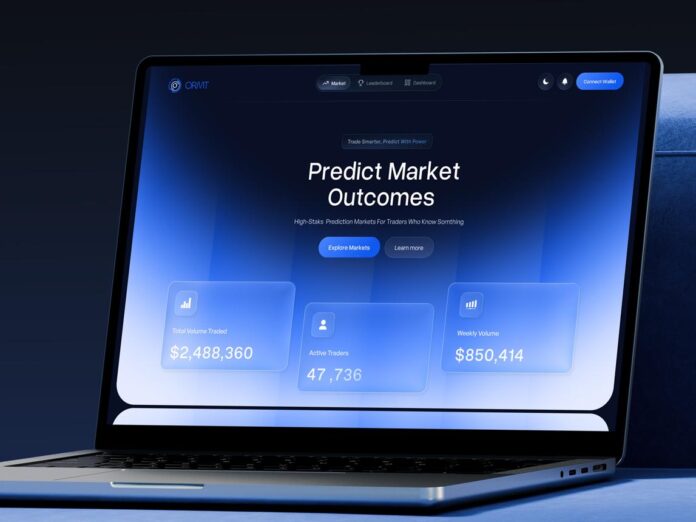
With the launch of prediction markets on Hyperliquid, crypto is revisiting one of its most controversial use cases: betting on real-world outcomes.
At first glance, the concept is not new. Platforms like Polymarket have already demonstrated strong demand for event-based trading — from elections to macroeconomic decisions.
What is new is the infrastructure.
Hyperliquid is embedding prediction markets directly into a high-performance, on-chain trading environment. That changes both the scale and the regulatory implications.
From Niche Product to Core Market Primitive
Prediction markets have historically lived at the edge of the industry:
- Legally ambiguous
- Operationally fragmented
- Often dependent on off-chain settlement or custodial structures
By integrating them into a native trading stack, Hyperliquid is positioning prediction markets not as an experiment — but as a core financial primitive.
This shift matters.
Because once prediction markets operate with the same efficiency as perpetual futures or spot trading, they stop being a niche curiosity and start competing for serious liquidity.
The Compliance Problem Hasn’t Gone Away
While the infrastructure has improved, the fundamental regulatory questions remain unresolved.
Prediction markets sit at the intersection of:
- Financial derivatives
- Gambling regulation
- Information markets
Different jurisdictions classify them differently — or not at all.
Under European frameworks such as MiCA, the situation becomes even more complex. MiCA does not explicitly cover prediction markets, but related areas — such as market manipulation, investor protection, and platform responsibility — still apply.
This creates a familiar pattern:
Technology moves faster than classification.
Key Risks Emerging From On-Chain Prediction Markets
From a compliance intelligence perspective, several risks stand out.
1. Market Manipulation
Thin liquidity combined with high-impact real-world events creates an environment where price signals can be influenced — or misinterpreted — as “truth.”
2. Information Asymmetry
Participants with privileged or early information can exploit markets that are perceived as neutral forecasting tools.
3. Jurisdictional Exposure
A globally accessible, on-chain platform may unintentionally facilitate activity that is restricted or regulated differently across regions.
4. Enforcement Limitations
Unlike centralized platforms, enforcing restrictions or reversing outcomes in decentralized systems is structurally difficult — unless governance intervention mechanisms exist.
The Governance Layer Will Define the Outcome
As with many DeFi innovations, the long-term viability of prediction markets will not depend solely on technology.
It will depend on governance.
Key questions include:
- Who defines which markets can be listed?
- How are disputes resolved?
- What happens in cases of manipulation or oracle failure?
- Are there mechanisms to intervene — and are they transparent?
Without clear answers, prediction markets risk repeating the same governance gaps seen across broader DeFi.
A Familiar Pattern: Innovation First, Structure Later
The launch of prediction markets on Hyperliquid reflects a broader industry dynamic:
- Build first
- Scale quickly
- Address compliance later
This approach has historically driven innovation in crypto. But as institutional participation increases and regulatory frameworks mature, the tolerance for undefined structures is decreasing.
RatEx42 Perspective
At RatEx42, prediction markets represent a convergence point of multiple risk categories:
- Trading infrastructure
- Governance quality
- Regulatory classification
- User protection
Platforms entering this space are not just launching a feature. They are entering a high-scrutiny category that sits close to both financial regulation and public policy.
The differentiator will not be who launches first.
It will be who can demonstrate:
- Transparent governance
- Clear market rules
- Defined risk controls
Conclusion
Prediction markets are not a new idea.
But integrating them into fast, scalable, on-chain trading environments changes their impact.
The question is no longer whether people want to trade on outcomes.
They do.
The question is whether the systems enabling that activity can meet the standards required for:
- Fairness
- Transparency
- Accountability
Because without those, prediction markets don’t become a new financial primitive.
They become a new regulatory fault line.